
Greyton cooks
Several former Capetonians have jazzed up the food scene in Greyton to such an extent that biking the surrounding mountain trails is no longer the prime reason to visit this village

By the time trays with cooling biscotti were covering every surface, boxes were piled all over the floor, batches of rusks were being shuttled in and out of the oven and Karen Jossel was working through the night, her husband Steven knew it was time for her to go.
And so a year after starting her biscuit empire in their house in the Cape Town residential suburb of Bantry Bay, Karen moved the operation to a small factory in the mixed use suburb of Observatory, taking with her a Defy home oven in which it had all began (it too now lives a countryfied existence in Greyton).
Fast forward 20 years, a range of more than 40 Bags of Bites products are available in numerous retailers countrywide from corporate supermarket chains to independent health stores. And the business now operates out of a much larger factory in Cape Town’s industrial area of Paarden Island.
But all of that was her first act. Since the Jossels moved in late 2015 to Greyton, in the Overberg region of the Western Cape 140kms from Cape Town, they’ve created one of the most popular eating/drinking/hanging-out spots in town. At the Hub & Spoke, mountain biking permits required to charge around the Riviersonderend mountains are sold. There’s gear for sale plus a bicycle mechanic on site. Coffee is brewed, fresh juices squeezed and meals made by transplanted Cape Town chef Kevin Mink.
“We’re an integrated group of people that make up the heart and soul of the Hub & Spoke,” says Steven of the landlord/independent business owner system he and Karen built in the barn-like structure that used to house a gym next door to their house.
“I’m the chairman of the mountain bike club and we’ve always spoken about having our own outlet – a place where people can meet, greet, have a cup of coffee, buy permits and just be in a common place. So this is the place.”
Steven has spent the past few years expanding the range of middle-of-the-road trails for cyclists by about 70kms. The new trails appeal to the rider that is less competition-minded (the Cape Epic, the annual eight-day mountain bike stage race that is very much not a middle-of-the-road affair, goes through Greyton).
For four and a half years after they opened the place, Karen cooked a once-a-week, garden-to-table, family-style harvest lunch. The event was called Heart & Soul. Then she hired another transplanted Capetonian cook to run the food side of things. With Jade Valjee manning the kitchen, the café opened six days a week for breakfast and lunch and Karen stuck to baking: gooey, creamy cheesecake; chocolate brownies; frozen lemon pavlova; florentines; chickpea fudge; peanut butter and date bites (the latter particularly popular with cyclists) and jars filled with Bags of Bites goodies (some made in Greyton, some made at the factory in Cape Town).
“I wasn’t such a great baker actually, but I loved cooking,” Karen says. “I miss what I created here. Not that I would choose to do it again, but you know when something really comes together and it just feeds every part of you? That’s what Heart & Soul did for me.”
When Jade left to start her own place in town, Karen encouraged her cousin, Cape Town-based chef and restaurateur, Kevin Mink, to take over. “We’ve been nagging Kevin since we got here,” adds Steven, “to collaborate, do an evening, come and live here.”
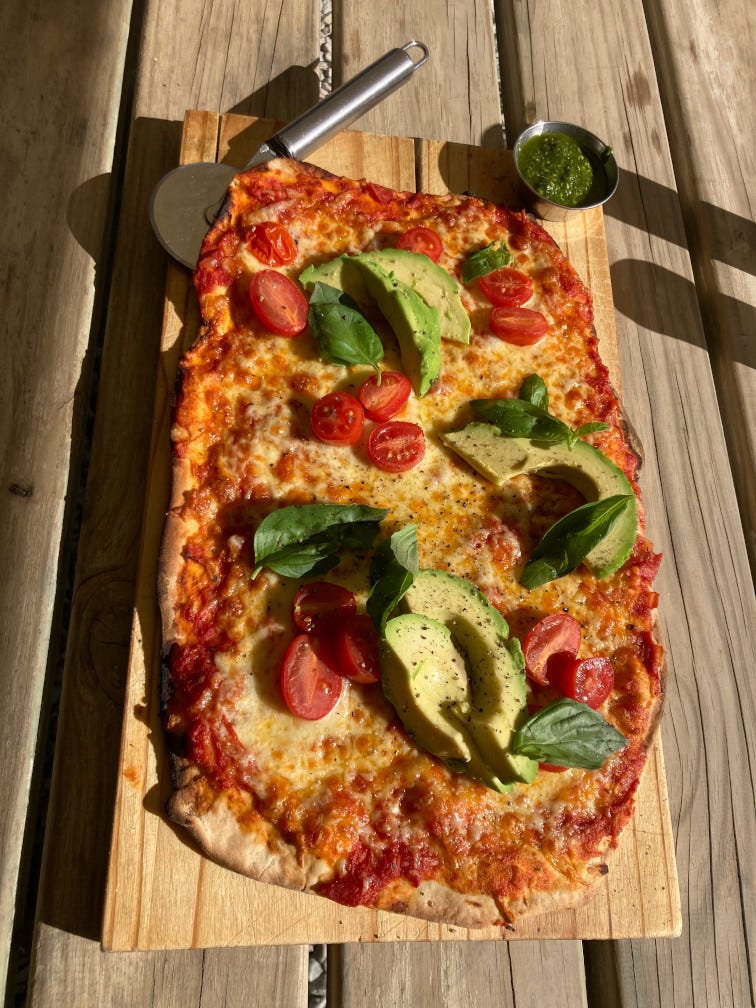
Eventually, during lockdown, Kevin decided to do a trial stint in Greyton. Two weeks turned into three months which turned into an open-ended stretch at the Hub & Spoke.
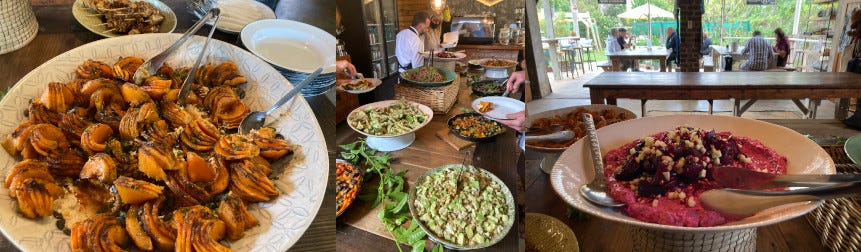
During his first few months there, Kevin continued the Saturday harvest lunch tradition that Karen had started; the long wooden table laden with contrasting colours and flavours: pasta dishes, salads, frittatas, platters of roasted vegetables, hummus of multiple hues. There was no theme or common feature and that was the intention, inspired by Karen’s advice that not “everything needs to go” together.
“It’s not about to be cutting edge here,” he says. “If you can’t get something you improvise, or you don’t do this or you do something else.”
His move to the country was precipitated by the Covid-caused closure of his inner city Cape Town wine bar bistro Mink & Trout, which he owned with fellow chef Leigh Trout. After lockdown restrictions forced them temporarily to shut, he went on a Buddhist retreat in the province of KwaZulu-Natal and worked in the kitchen there for a while.
When he returned to Cape Town, Kevin realised he wanted to sell the restaurant. A couple of years before that he had wanted to sell, but his partner had urged him to hold off. This time they did close and sold everything, and Kevin went back to private cheffing and catering from home, which he had done intermittently between gigs at top hotels and restaurants in the city.
“I think everywhere has its pros and cons and I like both. I like the city and I do like the country. We’ll see where it goes,” he says.
Also previously from the kitchen trenches in Cape Town restaurants, Jade is not seeing where it goes. Having had three children in Greyton and with her husband now owning half of the print shop in the same building where they live and where she has a café, Jade, now in her seventh year in the town, is a committed Greytonian.
“In these past few years, it’s become more of a destination town – very fast,” she says. “When Lance and I moved here, we were part of a handful of young people and now at least half of the town are young people. My daughter was one of a few kids and now the school is packed. It’s definitely become a lot more trendy. It’s more new-age and modern and new-thinking.”
After studying photography and doing an au pair stint in the US, she returned to Cape Town and decided to pursue her enduring passion for cooking as a career, which began when she took over meal prep in her childhood home – a place where spices and herbs featured heavily in her mother’s homemade Indian food (Jade’s father is Indian) with nothing used from a packet. “My mom is one of those moms that cooks every single night and every day.”
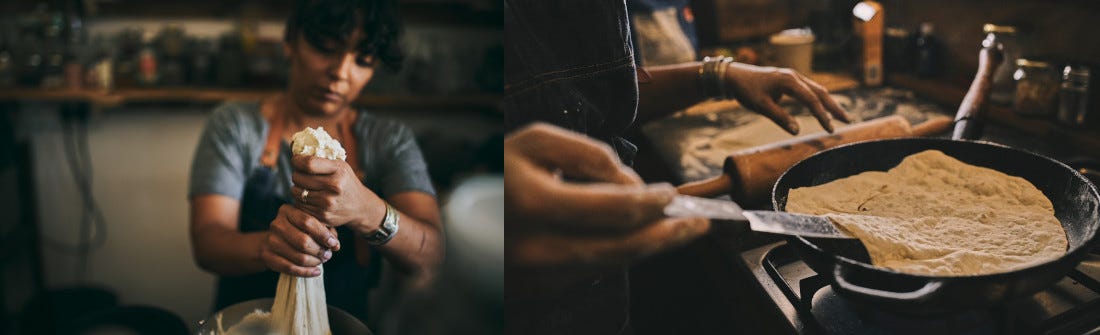
Accepted to South African Chefs Academy and shortly before she was to take her place there, Jade took Lance to check out Chefs Warehouse on Bree Street (it closed in March), of which she was a fan. There they bumped into the chef owner Liam Tomlin “who we didn’t actually know was Liam at the time”. It was a quiet afternoon so he chatted with them for a while. She mentioned she was about to enrol in culinary school. He said, she recalls: “‘Don’t waste your time; just come and work here’. Which I did.”
What followed were 14-hour shifts in the back prep kitchen without any breaks. “It was gruelling. That’s why most chefs smoke because it’s the only time you can actually go outside.” After a couple of months, she left. “I sort of gave up accepting the whole chef industry hierarchy, being treated really horribly. You know, the lower down you are, the worse you’re spoken to. But I learned a heck of a lot there.”
After Chefs Warehouse there was a similarly short stint doing breakfasts at Redemption Burgers at the Biscuit Mill in Woodstock – “in the tiniest kitchen in the world with one gas stove” – followed by a much longer stint at wildly busy sushi and seafood restaurant Willoughby & Co. at the Waterfront (“that was intense”). Jade worked in the Japanese kitchen. “That’s where I really got into all the Asiany kind of things which I mostly do now”.
Towards the end of her time at Willoughby’s, her catering company Lulu was born with help from her head chef at the restaurant. Their first client was Jade’s mother, catering for her elaborate dinner parties (Lulu is what Jade’s mom calls her).
One day during that time, Jade and Lance were Googling small towns and came across Greyton. They visited on her birthday weekend and stayed for a week. “We did all the local things like half price burgers and pizza night.” On their last day, they popped into The Post House hotel and it turned out they were looking for someone in the kitchen. As soon as they returned to Cape Town, Jade sent the chef who was also from Cape Town her CV. He sent her an offer and exactly a month later she and Lance moved.
By comparison with the restaurant kitchens in Cape Town, the one at The Post House was “very chilled”. Her role was to help generally and when the chef left, she took over. She ran the kitchen at the Old Potter's Inn for a year after which she was offered the same job at The Hungry Monk (now closed). She started catering again, opening the Social Food Club three times a week at the market square doing falafel, prego rolls, bunny chow.
Then she started collaborating with Steven, moving the Social Food Club to Hub & Spoke, which at that stage was situated opposite longstanding Greyton restaurant, The Oak & Vigne Café. Then Hub & Spoke moved to where it is now and Jade took over from Karen preparing Asian and Middle Eastern street food. Then the space where her café, Lulu Street Food, is located became available.
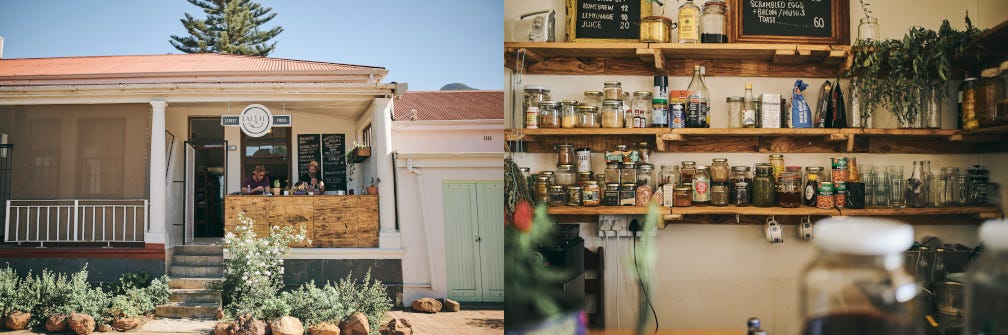
“At that point I hadn’t even thought of leaving the Hub because it was my family. It felt like mine – the kitchen and all of that.” She didn’t want to lose the space, though, as it was affordable and bound to be snatched up quickly. “I was very set on that. Still had no idea how, financially or anything. I just knew that I needed my own space and that I like to just be creative and make stuff and people like to eat my food, so somehow there was something in there.
“I had a sit-down with Karen and I said to her, listen, I’m not going to leave here without your blessing. I’m not leaving because I want to leave. I’m leaving because if I don’t do this, I’m going to kick myself later. She was very supportive and then it was the thing of okay, how the heck is this actually going to happen because we, like, have no money.”
That was at the end of February last year. After a crowdfunding campaign that she and Lance set up raised R14.5k (R8k in the first two days), they bought wood and appliances and a display fridge and paid someone to fit everything. During that time, Jade did takeaways and Lulu Street Food officially opened about two weeks later.
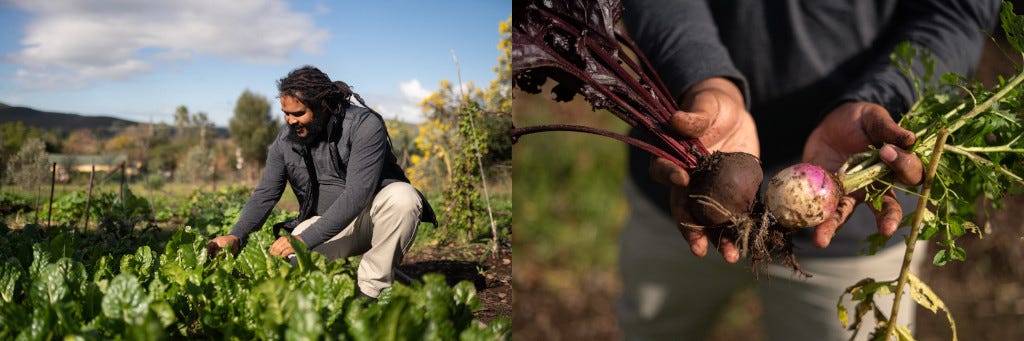
Marshall Rinquest was born in Cape Town but his family moved to Genadendal when he started school age seven (the town next to Greyton that’s built on the site of the oldest Moravian mission village in Africa). At home in Heuwelkroon today, he and his wife cook meals for their three kids with veggies Marshall has grown. None of them eat meat, fish, eggs or dairy except for a bit of cheese now and then which they buy. Apart from that, they make everything themselves, including vegan milks.
But in his work life he’s a vegetable farmer and seller, permaculturist and environmental educator. His garden is at Greyton’s EcoLodge, where he's also a partner in the backpackers hostel. With seven to eight different vegetables planted at a time, there’s a rotating seasonal roster of broccoli, cauliflower, turnips, beetroot, lettuce, spring onions, leeks, pumpkin, squash, butternut, green beans, corn, baby marrow, aubergine, parsnips, celery, spinach, carrots and herbs.
In 2012 Greyton joined the “Transition Town” movement. A worldwide network of 4000 towns, its focus is on food security and waste management. Marshall is the director of the community-based initiative and, as a result, spends most of his time shuttling between small-scale farmers and backyard gardeners in Greyton, Genadendal, Voorstekraal, Boesmanskloof and Bereaville, advising them on high-value crops, what’s needed at the fresh produce markets in Greyton, consulting, and doing seed-saving and permaculture workshops. He sells on their behalf at the markets. He does this as a “no-land farmer”, adding a small markup to cover his petrol costs doing the rounds collecting the produce and to cover his time selling it.
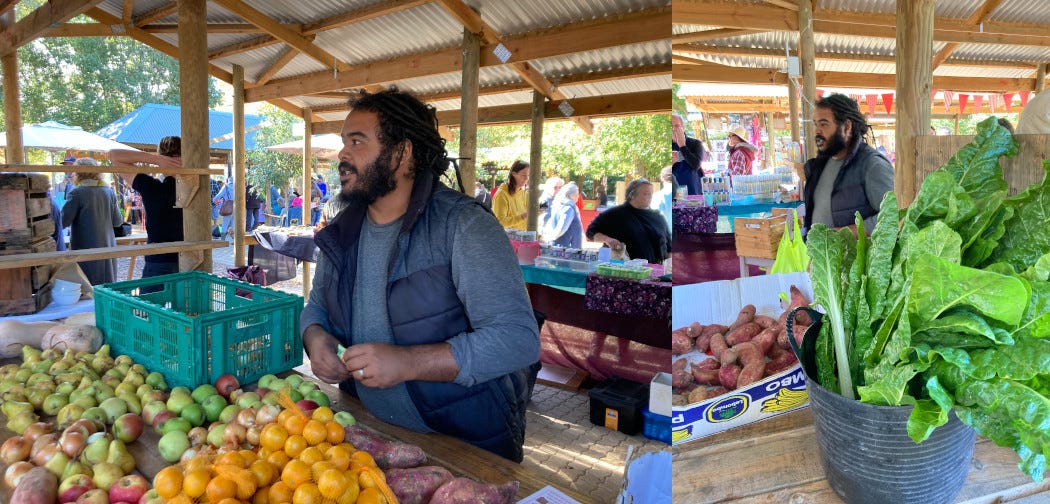
He also spends a lot of time in the area’s six schools teaching the kids in life skills classes how to grow their own food, how to preserve it and how to save seed. In after-school eco clubs they learn about the mountain flora and fauna, build ecobricks and do river clean-ups. The school veggie gardens Marshall has established also help supplement the school feeding schemes which, without the green veg produced from the gardens, would be predominantly starchy meals with a bit of butternut and carrot a couple of times a week.
“What are we doing in times of pandemics? What are we doing in times of disasters? How can we as towns depend on the people that live here? And the main thing is how do we also depend less on government, because government is not always there to support or government is not always reliable. So the ethic is around how can we tap into people’s expertise locally that live in this area? How do we tap into people’s knowledge?”
During the Covid pandemic, Greyton Transition Town in collaboration with the Red Cross and the church raised more than a million rand to supply immediate, short-term food aid for the locals who live hand-to-mouth and had lost their jobs. Eight hundred families in the four villages of Greyton, Genadendal, Voorstekraal and Bereaville received food parcels for almost six months. “This is obviously not a sustainable way. Doing food parcels for people is something again that brings dependency,” he says.
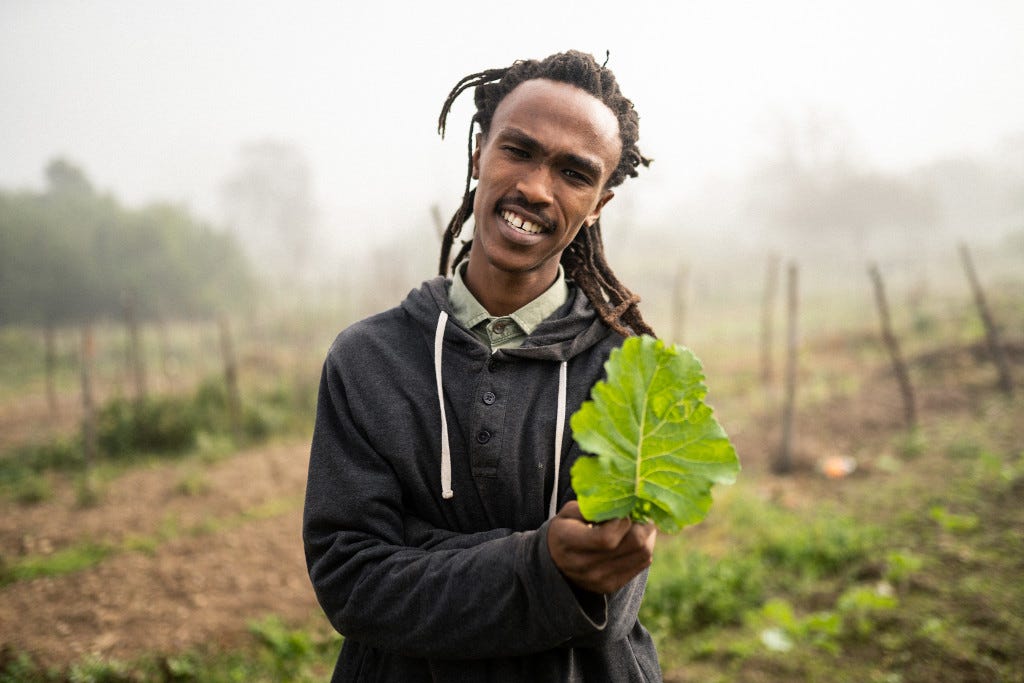
When they were down to the last R100 000, they realised they needed to put in place a system that would prepare the food parcel recipients to feed themselves, and that’s how Valley Food Gardens was born. “Luckily enough for us, people in this area generally have a kind of farming sense. People do plant their own food where they can; it is a farming community. There is a big history around people planting their own food. There are lots of small-scale farmers, lots of sweet potatoes and potatoes in the area. How do we boost it? How do we optimise it as much as possible? How do you make farming cool or funky for younger people so that they don’t feel that they’re moving backwards by planting their own food?”
Four hubs were created and qualified “champions” identified in each. They were supplied with seedlings, and households with space for gardens were given seedlings, too, with info on how to plant them. However, there were not many takers. “A couple of people said, ‘this is fantastic, we actually want to plant our own food. We always battle with seeds and seedlings’. But we quickly learned that people are so dependent on handouts, people are so dependent on food parcels, on SASSA money (South African Social Security Agency).”
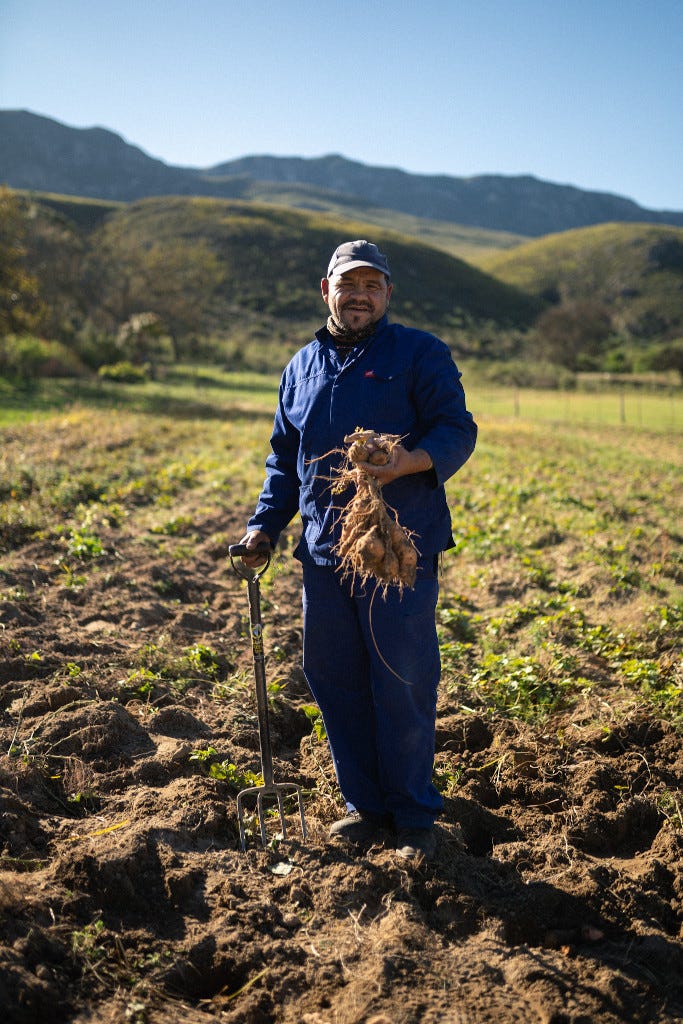
As time went on though, more and more people noticed the surplus harvests from the community members who did take up the offer to farm being sold at the twice-weekly markets. That made it a more appealing proposition. The Saturday market in Greyton caters more to weekend visitors and day-trippers, while the Wednesday market focus is on locals selling to other locals. Apart from produce, there’s bread, eggs from home-reared chickens, home-baked biscuits, health rusks and homegrown herbs. One local lady comes to the Wednesday market specifically for the biscuits from a baker in Genadendal and then she’s off, says Marshall.
“People are much more aware of where their food is coming from,” he says. The market is also an opportunity for locals from different socio-economic backgrounds and parts of the area to meet and converse. There’s bartering, recipe exchanges and gardening advice dispensed.
“How do we bring people together with different perspectives of the valley?” Marshall had wondered. “How do we get people interacting; how do we keep things that has interest to both parties, and usually that’s food.” The Wednesday market in particular has bridged that gap, using vegetables as the conduit for community interaction and cultivating a flourishing circular economy to boot.
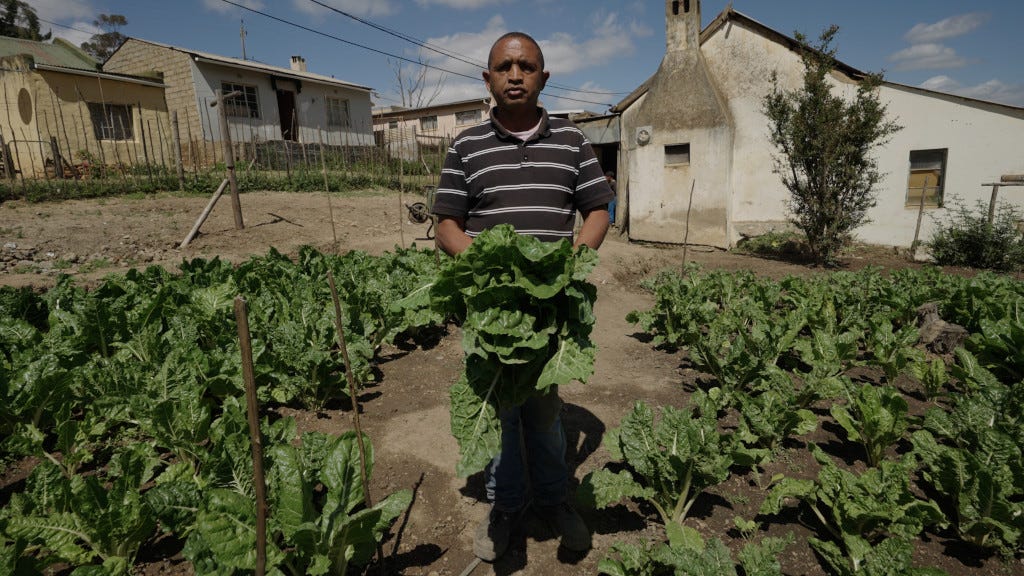
Of the influx of out-of-towner professionals and entrepreneurs moving to Greyton, Marshall has heard from some of them that apart from Greyton being a quirky town, peaceful and pretty, with good internet connections for working from home, “they have the opportunity to buy fresh produce two days a week which you don’t find much in other small towns in South Africa. You’d need to go to the supermarket to do that.”
One of those entrepreneurs, caterer and café owner Lori Solomon, particularly enjoys the miniature butternuts from Marshall. “You open them up and they’re deep orange. You don’t get that at the store,” she says.
“It’s incredibly good organic produce that’s locally grown. Nothing goes into a plastic bag, nothing goes through any kind of process besides getting into Marshall’s trailer and then coming to the market. And it’s pretty amazing to be able to support that kind of industry. I do that as much as I can and so does everybody else.
“The actual people in the community being there for each other: I’ve never experienced that like this, being in this village,” she continues. “And it’s profound. It’s just an amazing feeling of family. And support. Here you are trusted until you prove yourself untrustworthy, rather than the other way around. There’s also an understanding that we all have made the choice to be here, and so to help each other live the best lives that we can out here in this small town.”
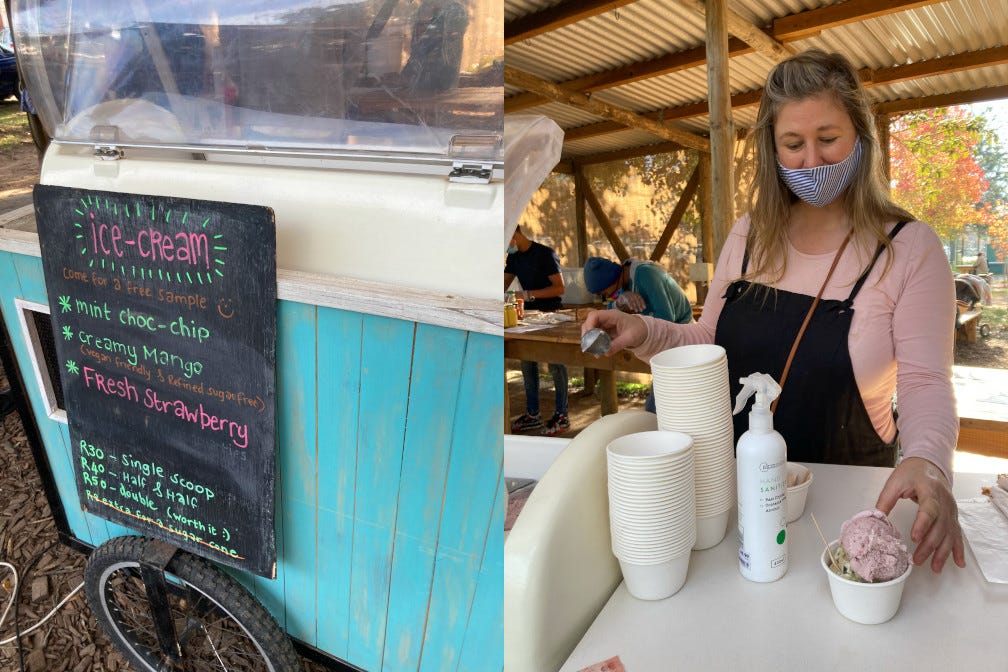
Greyton had always been Lori and her partner Aron’s favourite place for a weekend getaway. And as it happened they were in Greyton when the first lockdown was announced, so they wound up spending those first 21 days in a short-term rental in town. They had just bought and moved into a new house in Cape Town, having spent only six weeks in it before lockdown was announced.
The possibility of living in Greyton full-time one day when their kids were older had been discussed (Aron has a son and Lori a son and a daughter from previous marriages). But during the first few weeks of lockdown, Aron said to her, “what do you think about just staying?”
Aron is Aron Halevi, the musician who started Freshlyground in 2002, possibly South Africa’s most celebrated musical group. Lori was working for an interior design company in Cape Town, in corporate, commercial and retail spaces. “If lockdown and Covid hadn’t happened, my whole life would be different. I had nothing to lose and so I knew, I just knew that it was the moment and I had to grab it.”
In Greyton she focused on food. She grew up in a home with a “set menu”. “Probably for 15 years, I ate the same thing every Monday night and every Tuesday night. So I have this real hunger to learn different and do different.” She learned by reading cookbooks and watching things on YouTube: “I took it all in.” And then she got stuck in.
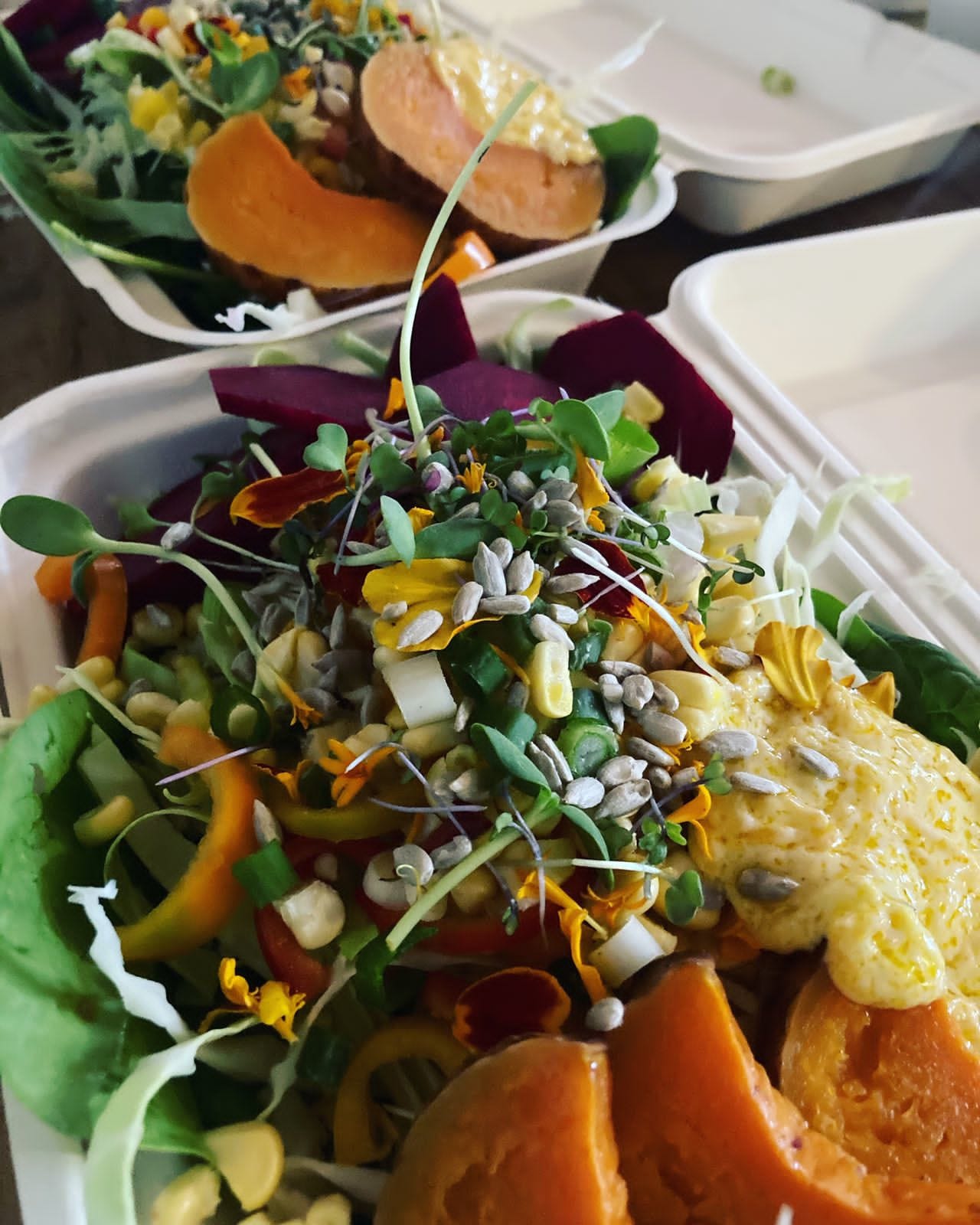
She started advertising her ice creams on the Greyton Facebook page and sold dairy and sugar free versions at Pure Café. She made healthy takeaways, creating a different salad every weekday, which she’d broadcast on Whatsapp and which people would collect from her home. Then she started selling cake. Twice a week she’d make hot dinners. There was a pasta-making phase (ravioli from scratch every Wednesday night for a month); another night it’d be veggie curry and naan bread. She’s catered private parties, birthday celebrations and bridal showers among them: once juggling two parties at the same time.
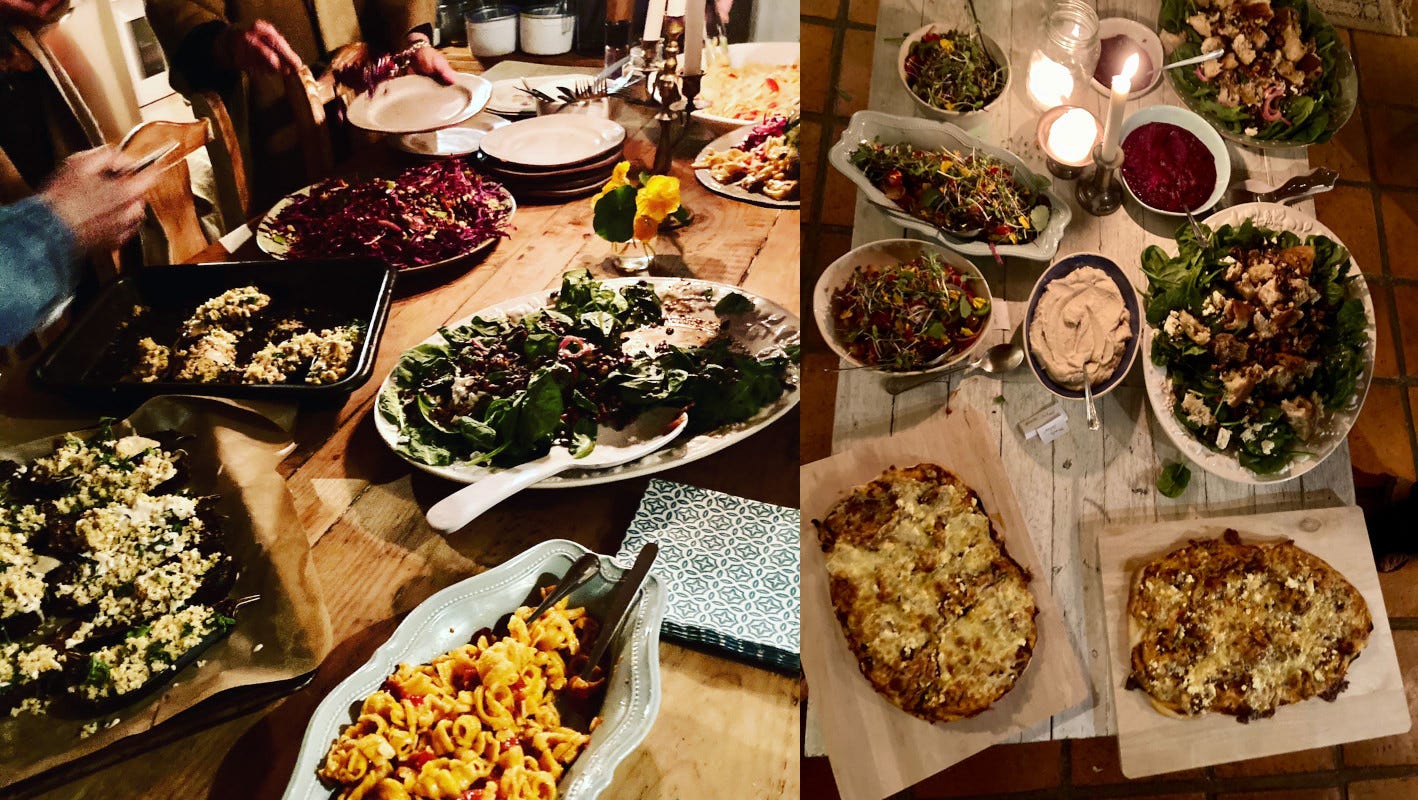
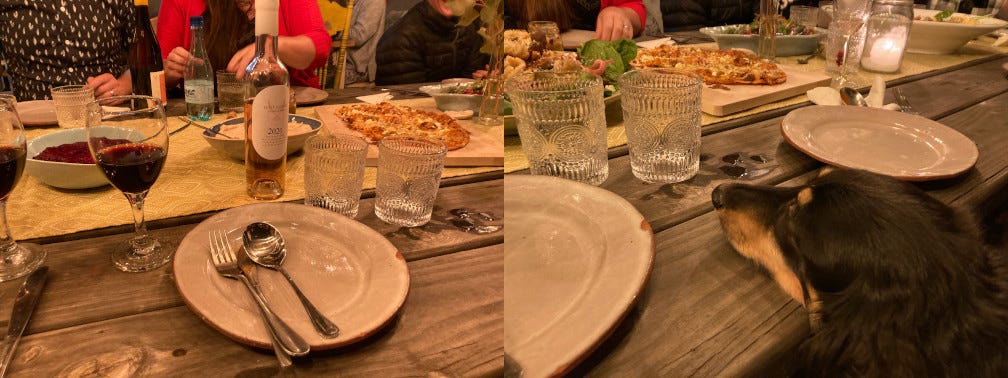
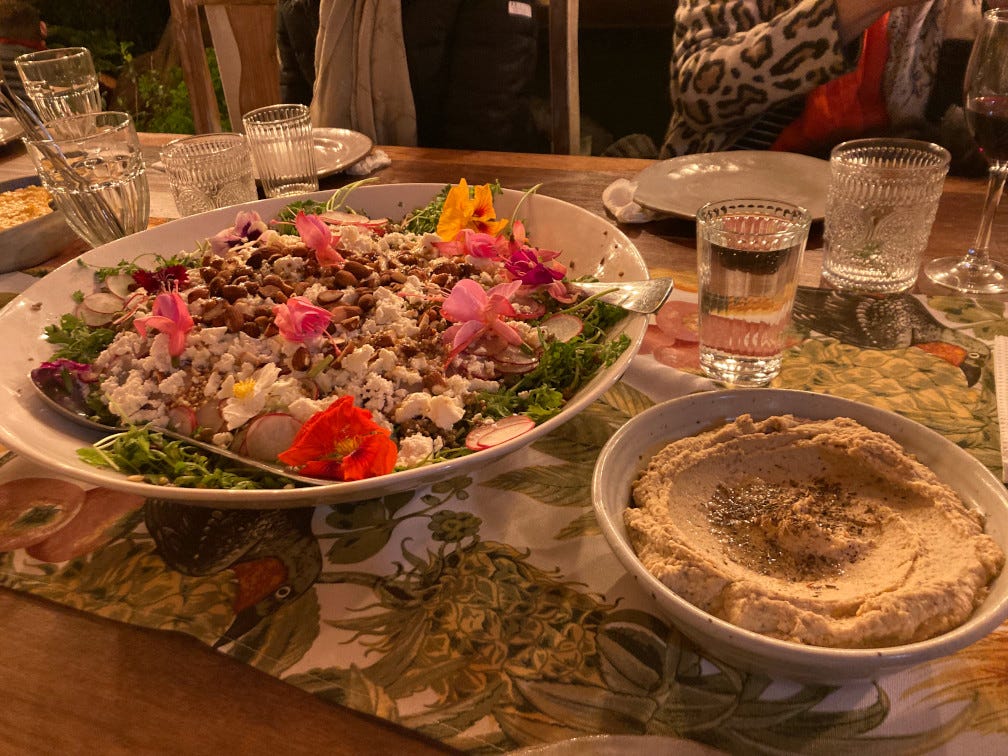
And then came the pièce de résistance: her Moonlight Dinner Club, which she started in September 2020 on the terrace of her home that overlooks a park-like garden. The first one was an all-locals event for 15 people, all of whom she knew would be receptive to the idea. At moonlight dinners these days, it’s common for Lori not to know more than a couple of people, so popular have they become with groups of visiting weekenders.
While the spread of dishes is different each time, the format is the same. It’s always vegetarian. There’s a welcoming cocktail and purified water on tap but other than that one is encouraged to bring one’s own drinks. “I get to choose everything. It’s not a restaurant; people don’t order off a menu. And I feel really grateful and honoured actually that people pay money to come eat at my table and they have no idea what they’re going to be eating.”
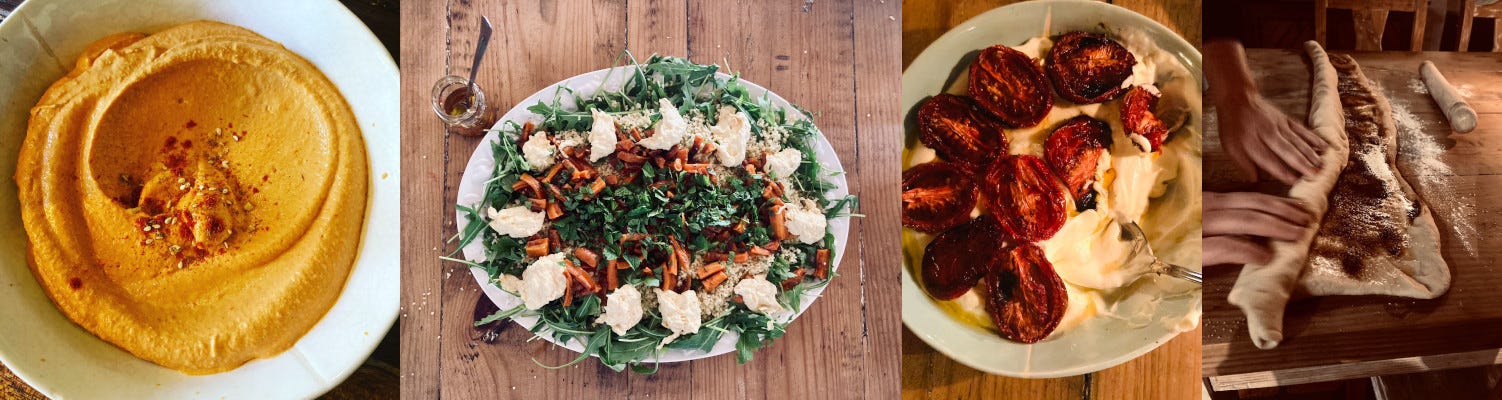
At each dinner there is a musical element. All of a sudden you might hear someone tinkling the ivories and it’ll be Aron playing surreptitiously in the background. Or he’ll join a muso connection that’s staying with them or passing through town for an impromptu set before dessert (one moonlight dinner featured classical guitarist Derek Gripper with Aron accompanying him on a handpan). And when he’s not playing or performing, he’s often pitching in on the serving front, setting oversized platters on the table and clearing plates (for the first few months, Lori and Aron were the staff complement).
The latest string to her bow is a combo café, deli, bookshop and gift shop on one of the village’s three main drags. Less than a year after Maånskyñ opened, it’s expanding into the space next door. Here Lori whips up breakfasts, lunches and an assortment of baked goods. And in a show of typical Greyton solidarity, she deliberately closes on Tuesdays because Hub & Spoke is closed on Mondays.
“I wish I’d learned this when I was 25: that when you really love something, it loves you back. It creates something in motion that other people respond to and it becomes a self-sustaining thing.”
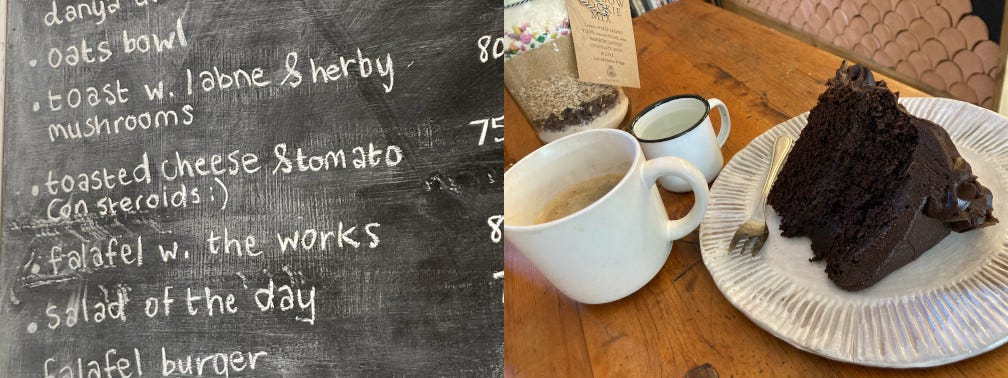
Visit Kevin Mink and the Jossels at the Hub & Spoke at 18 West Street
+ 27 83 457 0679Visit Jade Valjee at Lulu Street Food at 42 Main Road
Contact her via Whatsapp on + 27 82 650 2217; lulugreyton@gmail.comMarshall Rinquest sells seasonal veg at the Saturday market in the square on Market Street and at the Wednesday market in front of Pure Café at 51 Oak Street, both from 10am till noon
Contact him at marshall@greytontransition.co.za or on +27 73 486 1965Visit Lori Solomon at Maånskyñ at 52 Oak Street
For Moonlight Dinner Club announcements, send her a Whatsapp on
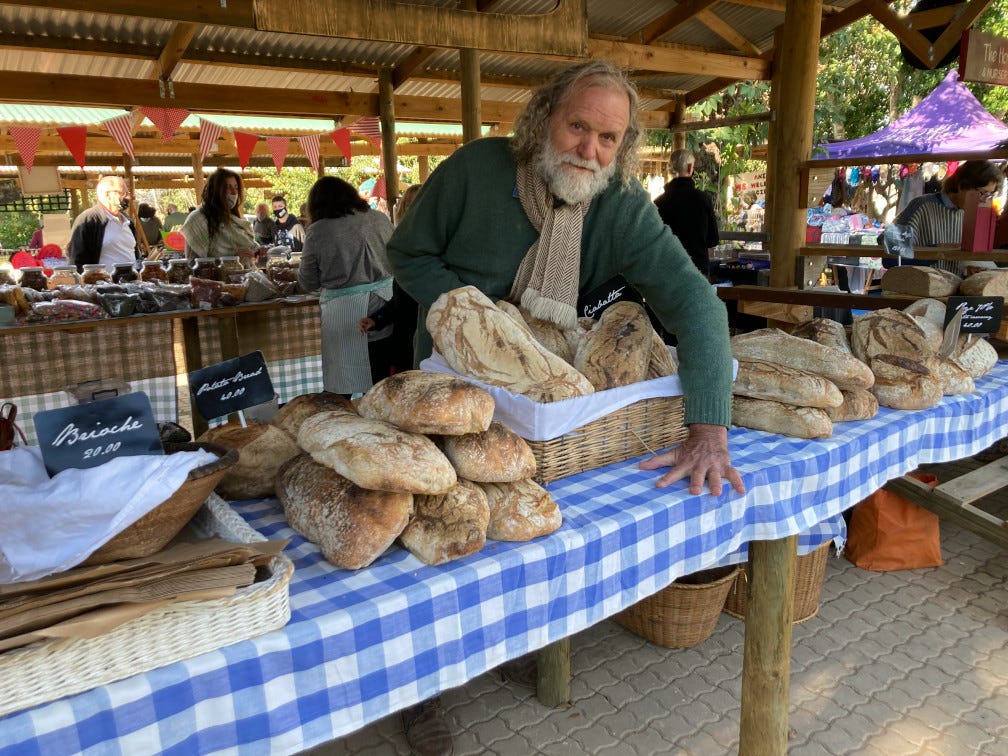
+27 78 953 3511; lorisolomail@gmail.comJohn “The Breadman” Williams sells his loaves at the Saturday morning market
Contact him on + 27 76 782 7076
The next big event in Greyton takes place over the first weekend in October, including a specially-themed (Wild) Moonlight Dinner Club by Lori Solomon and a walking tour of indigenous plants with Marshall Rinquest. See the programme and book tickets here
From the archive
The place to be or not to be:
Prince Albert rules
[originlly published in the Financial Mail on October 3, 2012]
Picture the Karoo and scrubby landscape probably comes to mind. And in Prince Albert there is plenty of that. But since it's one of the Karoo towns to get its water supply from the mountain – which gushes down the Swartberg and into the water furrows that line every street – it's also exceedingly lush.
Considering my predilection for a rural idyll, it's some sort of miracle I made it out of there without an offer to purchase in hand. After all, a number of former city folk didn't manage that at all.
“Prince Albert has this Lorelei effect,” said Susan Perold, who with husband Herman planted a vineyard in their one-hectare backyard and now produce 3500 bottles a year of SoetKaroo dessert wine, selling it all from the adjoining shop. “We came on an innocent holiday and bought a house.”
Since the town isn't within striking distance of a major urban centre – Cape Town is a four-hour drive away; George, two-and-a-half-hours – self-sufficiency is key. As real estate agent, co-owner of an arts and crafts shop and former Johannesburger, Yolande Singery, put it, “clingy people do not make it here.”
Elsa de Beer relocated from Pretoria six years ago and from March till the end of May manages production at Prince Albert Olives. “The minute I drove into Prince Albert, I knew, and that goes for a lot of people. It's like dropping into heaven,” she said.
Other transplanted residents include a couple of former diplomats who met and married in the corps, a bomb disposal consultant who divides his time between Prince Albert and the Sudan, and a fig farmer who divides her time between Prince Albert and London.
Two former SAA flight attendants opened the Karoo Kombuis; soon followed by their colleague, resident artist JP Meyer, for whom a career change was also in order. It transpired that Meyer built one of the cottages I stayed in – a typical “brakdak” number with windmills flanking the windows and a bathroom that once was part of a dam.
At the Country Store, I licked lemon ice cream served in scooped out lemons from the tree under which I sat while eating it. This was a few hours after devouring a divine soufflé-style omelette at Dennehof – the oldest building in town currently housing one of its finest guest houses – made with ingredients from Gay's Dairy next door; and the day after I munched on the type of falafel dreams are made of in a workshop led by ex-ad man Jeremy Freemantle at his recreational cooking school, African Relish.
It's a year-long party in this corner of the Karoo as residents celebrate the town's 250th birthday and the town library’s 150th (making it one of the oldest in the country). It's a good time to test De Beer's hypothesis for falling in love with the place: “Spend the night here and watch the stars.”
A bendy weekend in olive country
[originally published in the Swartland Gazette on June 26, 2012]
There is an abundance of olives in the Swartland’s Riebeek Valley but no yoga studios. That was the situation until an old friend of mine moved out there from Cape Town four and a half years ago and set one up. Residents of towns as far afield as Tulbagh and Wellington drive to her “Yoga Barn” on a weekly basis. And it is in her garage converted to a studio – with its vaulted ceiling and wooden beams, it is rather barn-like – that Claudia hosts bi-annual weekend yoga retreats, too.
During my numerous trips over the years since she moved, I’ve become acquainted with some of the locals and where the good spots are to eat and shop. Idyllic towns like Riebeek Kasteel are magnets for urbanites looking for country-style living that’s still feasibly close for daily commutes into the city for work.
Among Claudia’s new circle of mates I’ve met a woman who translates bodice rippers (and has a few racy stories of her own to tell), and a couple who traded in their small City Bowl apartment for a sprawling bit of land at the foot of the Kasteelberg mountain in Ongegund Village – a stone’s throw from Riebeek West – where they hold team-building getaways for corporates and gemsbok stroll past while they’re having breakfast. Others, such as interior decorator Salomé Gunter and power PR couple Ian and Lise Manley, have also made the town their own.
The retreat was due to start Friday evening so I beetled out there on Thursday in time to catch dinner with Claudia and her husband John at one of the packed local eateries, Mama Cucina. As they greeted everyone sitting around us, I asked John whether he knew every diner in the place. “Pretty much,” he said. “I know all of their faces.”
The next day I stocked up on local goodies including Heidi’s feta from gift shop Aitsa. This locally made cheese is cut in large chunks and sometimes studded with peppercorns. Also on the shopping list was handmade soap with fynbos ingredients from Still Pure – an essential oils cosmetic company produced exclusively in the valley and new since I had last been in town – and Riebeek Valley and Paardeberg area wines at cellar prices from The Wine Kollective.
“The only wine outlet in Riebeek Kasteel, the Swartland and maybe even the known universe that is solely dedicated to the special wines of the small, the famous and the utterly unknown wineries situated within a two-hour donkey ride from Riebeek Kasteel,” reads its tagline.
Another new spot was Beans About Coffee – a mod little espresso bar where beans are roasted on site. On the board, along with the list of hot drinks and cakes, were the offerings: free lemons and advice (good and bad). Having been eyeing the verdant lemon trees outside I enquired about this to which one of the employees of the shop, Ricardo, whipped outside and picked me a boxful. And lastly, Wicked, a new bakery where cupcakes, iced cookies and oozing chocolate caramel muffins line the tables.
That evening we began our retreat with Dutch-born, Cape Town-based senior Iyengar yoga teacher Brigitta Tummon. I can count on my fingers and toes the number of yoga classes I’ve done and this retreat, I discovered, was not designed for people like me. The next morning and afternoon we were guided into positions beyond my wildest dreams. Half the class was local and half had spun in from Cape Town with families in tow. I looked woefully around to discover everyone there was expert and I was way out of my depth.
Afterwards, a bunch of us from the retreat headed to another local eatery called Bar Bar Black Sheep. Over French onion soup and grilled aubergine slices sprinkled with pomegranate seeds, one of the yogis, a tandem skydive instructor, told us if anyone freaks out at 10,000ft and says “no, no, no”, the instructors push them out of the plane anyway and later joke that they heard “go, go, go.”
The next morning I begged off from the last session, already feeling some ominous muscle soreness setting in. Instead I curled up on the couch with a Kindle and a cup of coffee. My head was right way up, my back not convex, and I was not attempting to lift my body off the ground by putting all of my weight on my hands. Now this was an asana I could spend some time in.
